


2nd Jordan Economic Forum launched
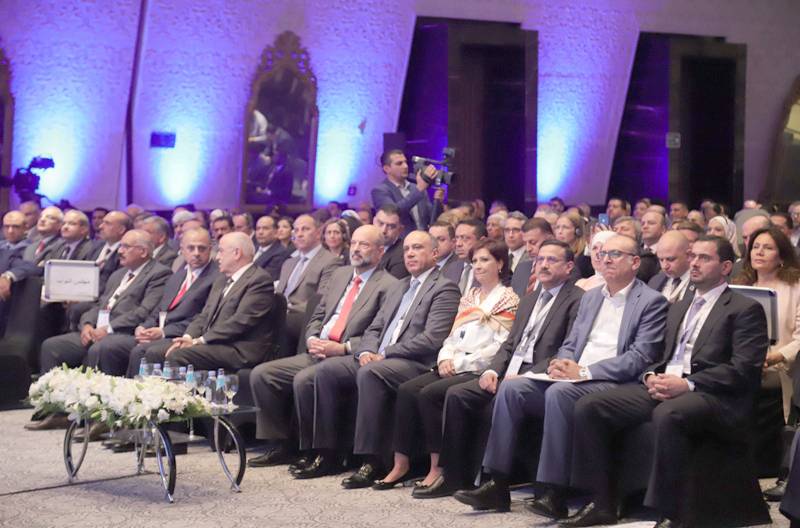
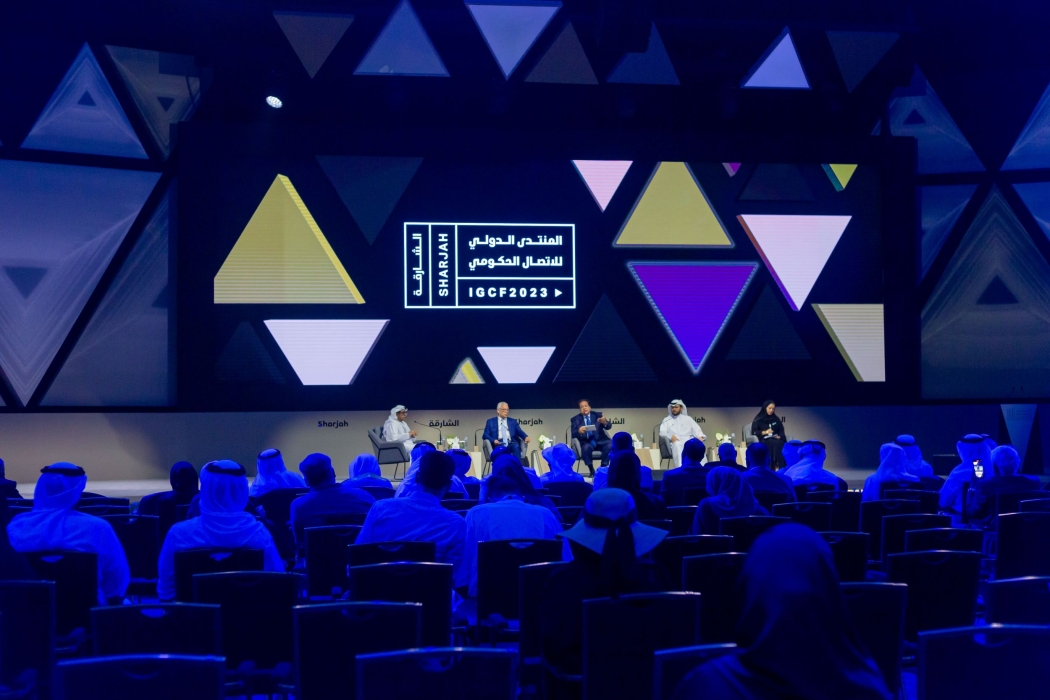
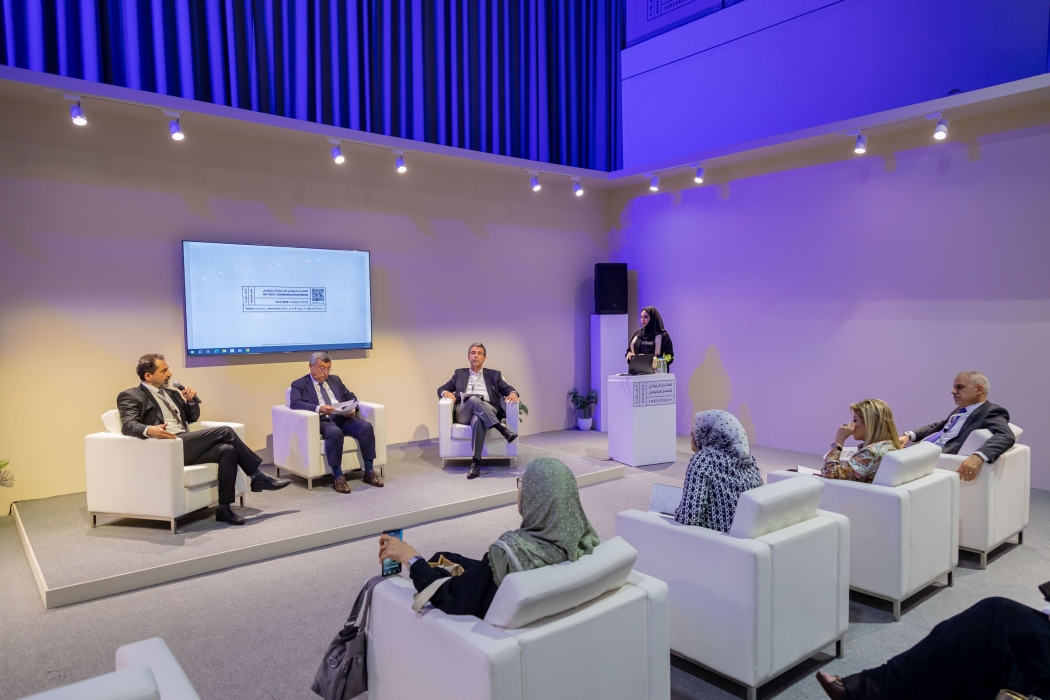
Deputizing for His Majesty King Abdullah II, Prime Minister Omar Razzaz, on Wednesday inaugurated the Second Jordanian Economic Forum, organized by the Lower House of Parliament, under the theme: "Economic Growth, Job Creation and Progress towards Sustainable Development Goals" .
The two-day forum aims to support dialogue between parliamentarians, the government and private sector representatives, and to strengthen the parliament's role in facilitating follow-up to the London conference outcomes and the reform agenda, to implement the 2030 Agenda for Sustainable Development, and to boost the House's legislative, and supervisory efforts.
During the forum inauguration, attended by the House Speaker Atef Tarawneh, government officials, private sector representatives, Razzaz said in his speech that the whole world has witnessed Jordan's tremendous resilience in facing challenges despite the negative effects of the last ten years on the economy and society.
Continuing: "The London conference was an international testimony that Jordan, under its Hashemite leadership and its people, was able to deal with the major challenges that have triggered the collapse, not only of countries' economies, but regimes."
The premier went on to say:"The Jordanian economy has grown at a rate of 2 percent over the past years, which is a significant figure when compared to an Arab region that has grown at a rate of 1 percent," adding the situation for the Jordanian economy is "not pessimistic, and there are encouraging indicators and figures that can not be overlooked".
On the main indicators achieved by Jordan's economy, Razzaz pointed to the increase of national exports by 4.3 percent during the first half of this year, compared with the same period last year, and the surge of the Central Bank of Jordan's reserves by 6.4 percent during the first seven months of 2019, which reached $12.2 billion compared with $11.5 billion, against the same period last year.
In the same context, he said the tourism income increased by 8 percent during the last eight months of 2019, as Jordan moved 10 rankings on the Sustainable Development Index against the same period 2018.
The premier also announced an increase in the income tax revenues by JD41 million in August, 2019, compared with JD30 million the same month 2018, as sales tax collected reached JD330 million, against about JD261 million the same month of 2018.
During the last ten years of instability and volatility, Razzaz noted the energy sector was the most affected, adding a high national committee that brings together the government, heads of House, and Senate committees and experts meet periodically and continuously to review the energy network related to power generation, resource diversification, and generation to come up with specific recommendations that the government is working on.
In this context, the premier said bureaucracy is still an obstacle in dealing with the private sector that seeks to invest and export.
On solutions, he noted the legislative environment's instability during the recent years is due to the great difficulties facing Jordan, and the government had to make difficult but necessary decisions, including the income tax law, pointing to a flaw in the tax structure in general, which leads us to the challenges that require structural remedies in the energy sectors and public finance.
Discussing the government's action agenda, he said: "We are in a program that has emerged from meetings with relevant actors, and we have a five-year plan underway with the continued follow-up of His Majesty the King and the government to the goals, programs and what is being achieved, in addition to the program of government priorities for 2019 and 2020, which is under implementation. ''
Razzaz also announced the remaining months of this year will witness decisions and legislations that will be taken and completed, in cooperation with the Lower House, in the direction we all seek towards self-reliance, which is no longer a luxury, but an option we all commit to it.
//Petra// AG End.
The two-day forum aims to support dialogue between parliamentarians, the government and private sector representatives, and to strengthen the parliament's role in facilitating follow-up to the London conference outcomes and the reform agenda, to implement the 2030 Agenda for Sustainable Development, and to boost the House's legislative, and supervisory efforts.
During the forum inauguration, attended by the House Speaker Atef Tarawneh, government officials, private sector representatives, Razzaz said in his speech that the whole world has witnessed Jordan's tremendous resilience in facing challenges despite the negative effects of the last ten years on the economy and society.
Continuing: "The London conference was an international testimony that Jordan, under its Hashemite leadership and its people, was able to deal with the major challenges that have triggered the collapse, not only of countries' economies, but regimes."
The premier went on to say:"The Jordanian economy has grown at a rate of 2 percent over the past years, which is a significant figure when compared to an Arab region that has grown at a rate of 1 percent," adding the situation for the Jordanian economy is "not pessimistic, and there are encouraging indicators and figures that can not be overlooked".
On the main indicators achieved by Jordan's economy, Razzaz pointed to the increase of national exports by 4.3 percent during the first half of this year, compared with the same period last year, and the surge of the Central Bank of Jordan's reserves by 6.4 percent during the first seven months of 2019, which reached $12.2 billion compared with $11.5 billion, against the same period last year.
In the same context, he said the tourism income increased by 8 percent during the last eight months of 2019, as Jordan moved 10 rankings on the Sustainable Development Index against the same period 2018.
The premier also announced an increase in the income tax revenues by JD41 million in August, 2019, compared with JD30 million the same month 2018, as sales tax collected reached JD330 million, against about JD261 million the same month of 2018.
During the last ten years of instability and volatility, Razzaz noted the energy sector was the most affected, adding a high national committee that brings together the government, heads of House, and Senate committees and experts meet periodically and continuously to review the energy network related to power generation, resource diversification, and generation to come up with specific recommendations that the government is working on.
In this context, the premier said bureaucracy is still an obstacle in dealing with the private sector that seeks to invest and export.
On solutions, he noted the legislative environment's instability during the recent years is due to the great difficulties facing Jordan, and the government had to make difficult but necessary decisions, including the income tax law, pointing to a flaw in the tax structure in general, which leads us to the challenges that require structural remedies in the energy sectors and public finance.
Discussing the government's action agenda, he said: "We are in a program that has emerged from meetings with relevant actors, and we have a five-year plan underway with the continued follow-up of His Majesty the King and the government to the goals, programs and what is being achieved, in addition to the program of government priorities for 2019 and 2020, which is under implementation. ''
Razzaz also announced the remaining months of this year will witness decisions and legislations that will be taken and completed, in cooperation with the Lower House, in the direction we all seek towards self-reliance, which is no longer a luxury, but an option we all commit to it.
//Petra// AG End.
تابعو جهينة نيوز على