



Umniah by Beyon Brings Healthcare Leaders Together to Strengthen Cyber Readiness and Resilience
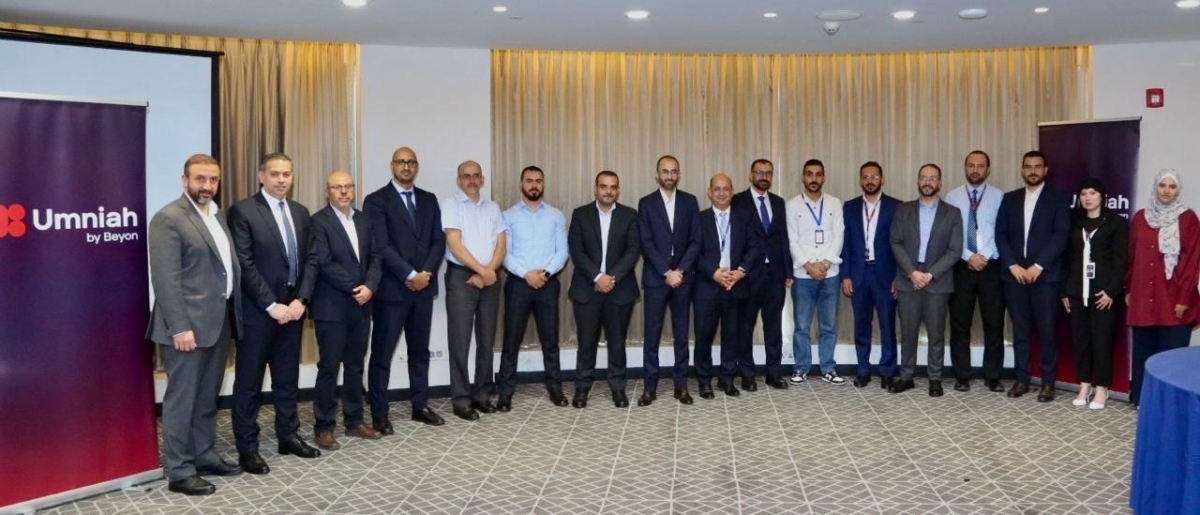
Amman, Jordan – Umniah by Beyon brought together senior leaders from Jordan’s private healthcare sector for a focused discussion on cybersecurity and business continuity, as hospitals face a fast-changing threat landscape and growing dependence on digital systems.
The workshop brought together chairpersons, general managers, CEOs, CIOs and information security leaders from private hospitals across the Kingdom to examine emerging cyber risks, how organizations can better prepare for them, and what it takes to protect the systems and operations healthcare providers depend on every day.
The session is part of a broader approach Umniah takes with customers across different industries. Beyond providing technology and ICT solutions, Umniah regularly brings customers together to share expertise, discuss emerging developments and understand what a rapidly changing technology and cybersecurity environment means for their businesses.
For healthcare providers, those conversations have particular urgency. Medical records, diagnostic services, hospital operations and patient communications increasingly rely on connected systems. A cyber incident can therefore have consequences well beyond compromised data or unavailable IT systems; it can affect the continuity of the services and operations a healthcare institution needs to function.
The discussion looked at cybersecurity as a continuous discipline, from prevention and monitoring to early threat detection, incident response, and recovery. Umniah also shared insights from its Security Operations Center (SOC), which provides 24/7 security monitoring, detection and incident response, alongside capabilities in network and systems security, advisory and governance services, vulnerability assessment and security readiness. The workshop also explored how AI is changing both the threat landscape and the tools available to detect and respond to cyber risks.
Umniah brings practical experience to this conversation. Its customers include some of Jordan’s prominent healthcare institutions, alongside organizations of different sizes and across a wide range of industries.
Over the years, Umniah has expanded its Enterprise capabilities well beyond connectivity. Today, it supports customers across connectivity and networking, cloud, cybersecurity, managed services, Data Centers and ICT solutions, bringing infrastructure, services and technical expertise together through one technology partner.
That capability continues to grow. Umniah is investing across its networks, security and network operations, Data Centers and digital infrastructure, and is preparing to launch its new Data Center in Amman, which will be the largest in the capital. The investment will further expand the infrastructure and capabilities available to businesses and institutions in Jordan.
Abdulsalam Obeidat, Chief Business Officer at Umniah by Beyon, said: "Our relationship with customers goes beyond providing technology and services. We also have a role in helping them keep pace with what is changing and understand what those changes mean for their business. That matters particularly in healthcare, where we already work with some of Jordan’s prominent institutions and understand how critical the systems behind their operations have become.”
He added: "Connectivity is only one part of what our customers need from us today. Our capabilities now extend across cloud, cybersecurity, managed services, Data Centers and ICT, and we continue to invest in all of them. We want our customers to see Umniah as a technology partner that understands their business, helps them prepare for what is ahead and can support them as their needs evolve.”
Amjad Frouqa, Director of Information Security and Business Continuity at Umniah by Beyon, said: "In healthcare, cybersecurity and business continuity cannot be treated separately. An incident may begin with a single system or device, but its impact can quickly extend to the systems and operations an institution relies on to deliver its services. Protection alone is not enough. Organizations need to be able to detect threats early, respond quickly, contain the impact and restore operations as efficiently as possible.”
Frouqa added: "Cyber risks are constantly changing, and so are the ways we respond to them. That is why these conversations with customers need to be ongoing. Sharing what we are seeing, learning from the challenges they are facing and discussing how the threat landscape is evolving all help organizations prepare before an incident occurs, rather than after.”
The workshop concluded with an open discussion between hospital leaders and cybersecurity specialists on the issues they are seeing across the sector, including cyber risk, compliance and business continuity. It also gave participants an opportunity to share their priorities and practical needs as healthcare organizations prepare for an increasingly complex digital environment.